Start With a Specific Question
A broad question can be hard to answer. Ask about one part of the project at a time. For example, you might need help identifying a trim detail, choosing between two repair methods, or deciding what to inspect before removing a component.
Include the car model, approximate year, project stage, and problem you can see. Mention what you have already checked. This gives other owners enough context to offer practical suggestions. It also prevents the discussion from moving toward guesses.
A good question is easy to repeat at a club meeting. Write it down before the meeting so you can explain it in a clear order.
- What part of the car needs attention?
- What condition is the part in now?
- Which options are you considering?
- What result do you want to achieve?
- What information is still missing?
Use Records and Photos to Explain the Work
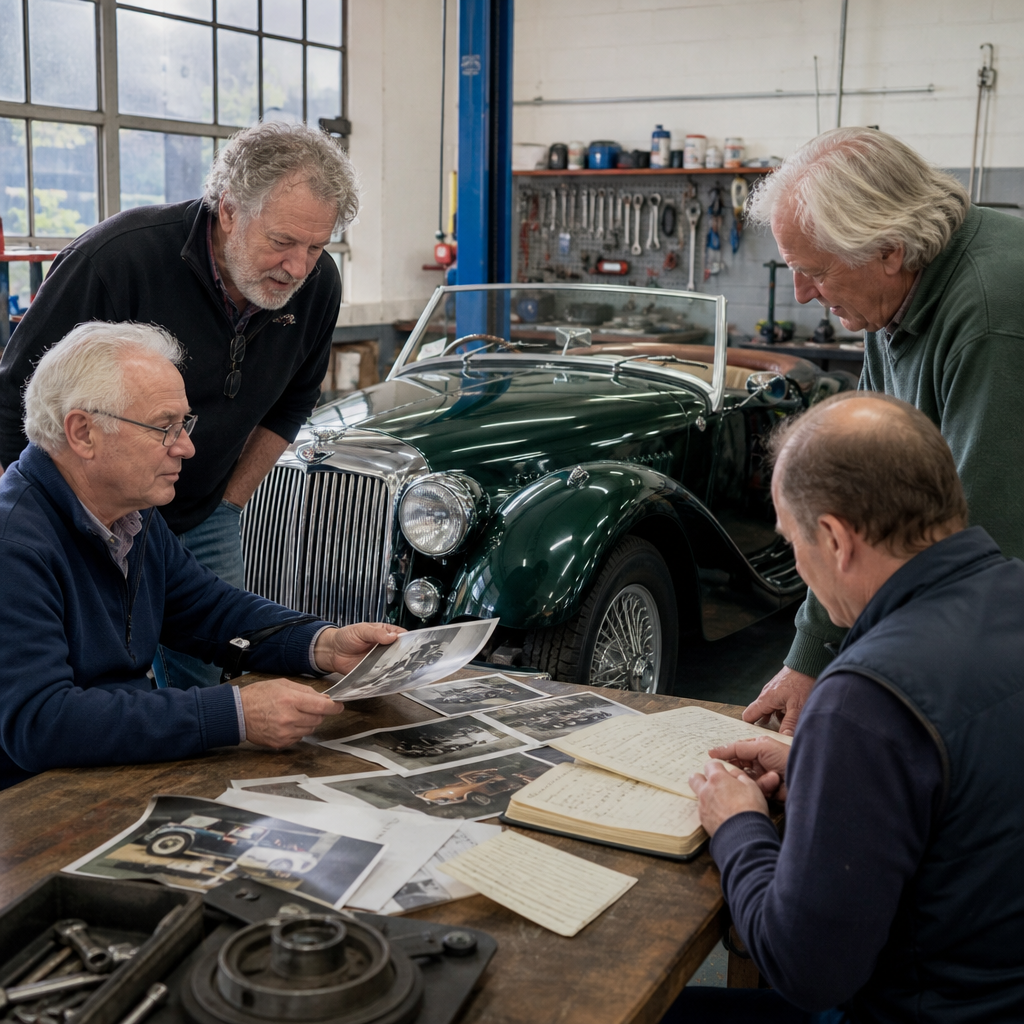
Photos can show details that are difficult to describe. Take pictures before, during, and after each important stage. Include close views of fittings, fasteners, wiring, surface damage, and areas where parts meet. Add a wider image when the overall position matters.
Written records are just as useful. Note the date, the work completed, parts removed, measurements taken, and questions that remain open. Keep observations separate from assumptions. This helps the group understand what is known and what still needs checking.
Bring a small set of relevant images to a meeting instead of showing every photo from the project. Label each image with a short description. A clear record supports better discussion and creates a reference for future work.
| Record | What to include | Why it helps |
|---|---|---|
| Before photo | Overall condition and close details | Shows the starting point |
| Work note | Date, task, and observation | Preserves the sequence |
| Part record | Name, location, and condition | Reduces confusion during reassembly |
| Question list | Unclear points and possible options | Keeps discussion focused |
Make Club Discussions More Useful
A helpful discussion has a simple structure. Begin with the question. Show the relevant evidence. Invite members to describe what they have seen in similar work. Ask which advice depends on the car, the part, or the desired finish.
Different owners may suggest different methods. That is normal. Record the reasons behind each suggestion. One approach may suit an original preservation project. Another may suit a car that needs regular road use. The group should make these differences clear.
It also helps to separate personal preference from information that can be checked. Factory documents, part references, measurements, and photographs can support a suggestion. Practical experience still matters, but it should be described as experience rather than treated as a universal rule.
- State the problem in one or two sentences.
- Show photos, notes, or measurements.
- Collect several relevant experiences.
- Compare the reasons for each option.
- Record the points that need further checking.
Record the Advice After the Meeting
Useful advice can disappear when it stays only in conversation. After the meeting, write a short summary while the details are fresh. Include the original question, the main suggestions, the evidence discussed, and any next steps.
Use neutral wording. Name the method that was discussed without presenting it as the only correct choice. If the group did not reach a conclusion, say so. A clear record can still show what information is needed before work continues.
Keep summaries organized by car, system, or project stage. Add links to your own photos or file names when appropriate. Over time, these notes can form a practical knowledge base for club members. They can also help new participants join discussions without repeating every earlier question.
- Original project question
- Relevant photos and measurements
- Advice and reasons given
- Points that remain uncertain
- Agreed follow-up or next inspection